
Acroyoga for Couples: 7 Poses That Build Trust
The best acroyoga poses for couples are simple, low to the ground, and need real communication: chair, foot to shin, bird, folded leaf, front plank, a supported back bend, and a standing hand-to-hand balance. They build trust because you can't do them without asking for what you need and listening to your partner. You don't need to be flexible or strong to start.
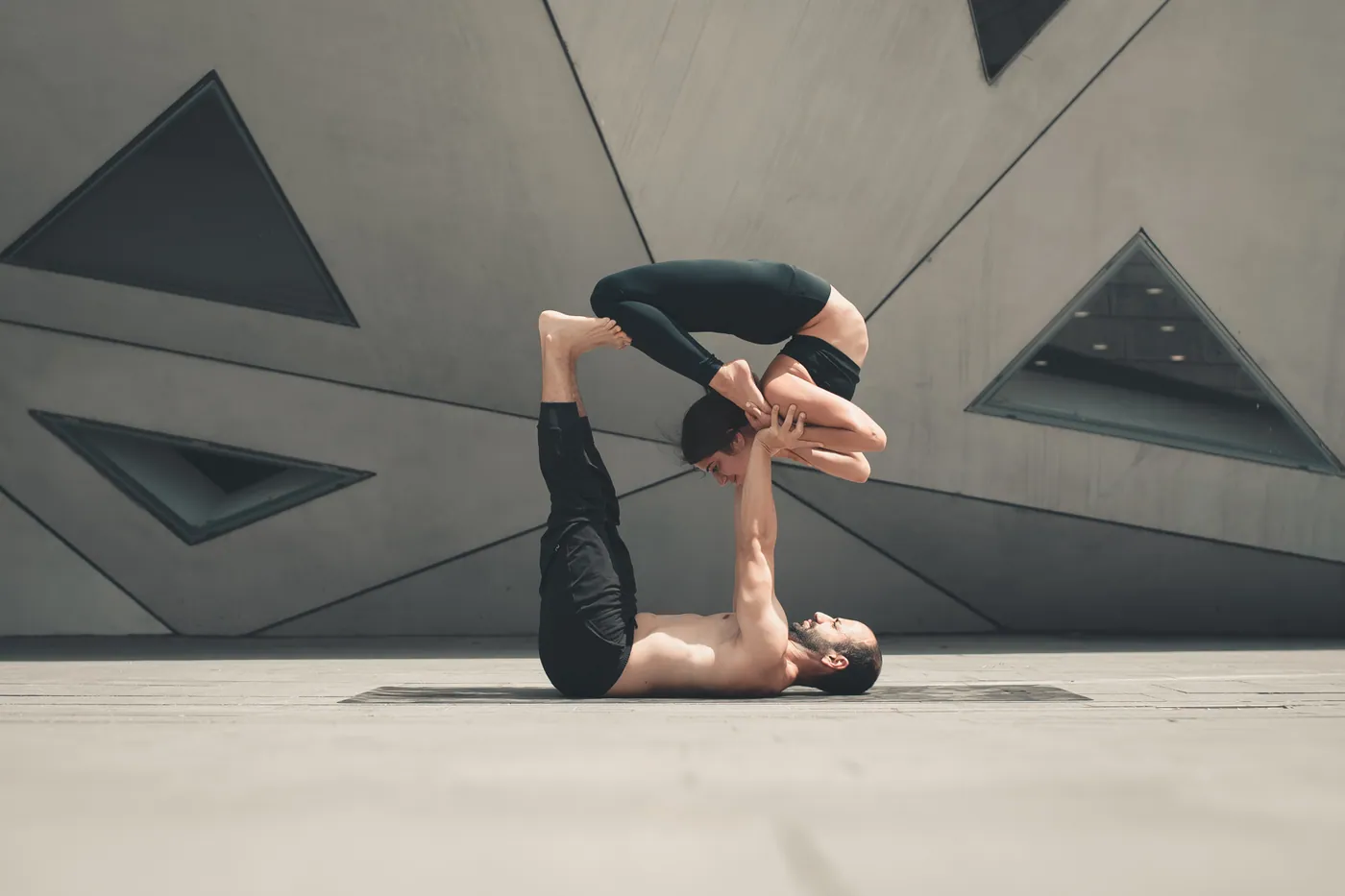
I teach couples all the time, in my studio in Tel Aviv and in my online school. The most common thing I hear is "we thought we'd fight about it." What actually happens is that they laugh a lot and end up talking to each other better. Here are seven poses to try, and how to do it safely.
Why does acroyoga build trust between couples?
Because the pose only works when both of you do your part. The flyer has to let go and trust the base. The base has to stay steady and pay attention. Neither of you can fake it.
It also forces clear communication. In everyday life we hint, we assume, we sigh. In acroyoga you say what you need: "slower," "higher," "down." I wrote about this in why do acroyoga: you only communicate what you actually need, and you learn to ask for it clearly. That habit follows you back into real life.
What words should couples use in acroyoga?
Agree on a small vocabulary before you start. Mine is simple.
"Ready?" The base asks, the flyer answers yes when they are. "Up" starts the move. "Down" ends it, right away, no questions. Anyone can say "down" at any moment, and the other person responds immediately without taking it personally.
That last part matters. When someone says "down," it's information, not criticism. Treat it like a seatbelt, not a failure.
How do you stay safe as a couple?
Practice on a mat or soft grass with clear space around you. Keep the poses low to start. Have a spotter, a third person who stands close and watches, for anything that takes the flyer higher than a few inches. If you want the full checklist, read acroyoga safety and spotting. Not sure who does what? Base vs flyer explains both roles.
What are 7 acroyoga poses that build trust?
1. Chair
One of the first poses I teach. The base lies down, the flyer sits on the base's feet like a chair, and they hold hands. It's simple and safe, and it looks great on video. The trust lesson: the flyer sits down on faith.
2. Foot to shin
The flyer stands with a foot on the base's shin. It teaches the first real lesson of acroyoga: weight travels straight through stacked bones, so you don't have to muscle through it. The trust lesson: the base is solid and the flyer learns to lean on it.
3. Bird
A classic. The flyer balances on the base's feet, belly down, arms out. There are versions with hands, without hands, and with one foot. It's a good party trick and it's perfect for photos. The trust lesson: you let go of control and float.
4. Folded leaf
A gentle stretch for the flyer, a quiet breather between harder holds. The flyer folds over the base's feet, and you can even give a little massage. It's a slow, calm pose that works well for couples who want to relax. The trust lesson: you let your partner support your whole weight.
5. Front plank on the base's feet
A beginner-friendly variation that teaches body tension. The flyer keeps a straight line from head to heels, the base holds steady. The trust lesson: you give and receive clear feedback ("tighter," "relax your hips").
6. Supported back bend
The flyer lies back over the base's thighs or feet while the base supports the back. It opens the chest and shoulders. Go slowly and use a spotter. The trust lesson: you rely on your partner's hands when you can't see them.
7. Standing hand to hand balance
Both of you stand and lean away from each other, holding hands, so each of you holds the other's weight. There's no height, so it's very safe. The trust lesson: you only stay up together, so neither one can quit.
What if one partner is nervous?
Go slow, and let the nervous one choose the pace. Start with poses that stay close to the floor. Use your words. If you laugh a lot, great, laughing relaxes the body, which makes everything safer.
Many couples find it helps to be the flyer first, then swap roles. Being the base teaches you a lot about what your partner is feeling.
How can couples keep learning?
Short, regular practice beats one big session. Watch one short video a night and in about 30 days you can be flowing through a real sequence together. I wrote more about that in acroyoga date night, and there's a full page for couples at acroyoga for couples.
My online school is built for this. There are nearly 80 video lessons in the first three levels, organized as flows. Each flow teaches a few poses and then you flow it all together. You'll also find warm-ups and partner trust games, and you can post your practice videos for feedback from me. It costs $33 a month or $250 a year, and the first 7 days are free.
Try the free trial at AcroByJoe Online School
FAQ
Is acroyoga good for couples?
Yes. It combines play, touch and clear communication, which are the three things that help couples feel closer.
Do we need experience?
No. The poses above are for complete beginners, and you can start on a mat in your living room.
Do we need a spotter?
For anything above a few inches off the ground, yes. A spotter is a third person who stays close and keeps the flyer safe.
What if we argue during practice?
It happens, and it's useful. Pause, reset your words, and try again as a team. It's not a blame game.
Can couples learn acroyoga online?
Yes. Follow structured video lessons, practice together, and send videos for feedback.